Charmshots editorial ·
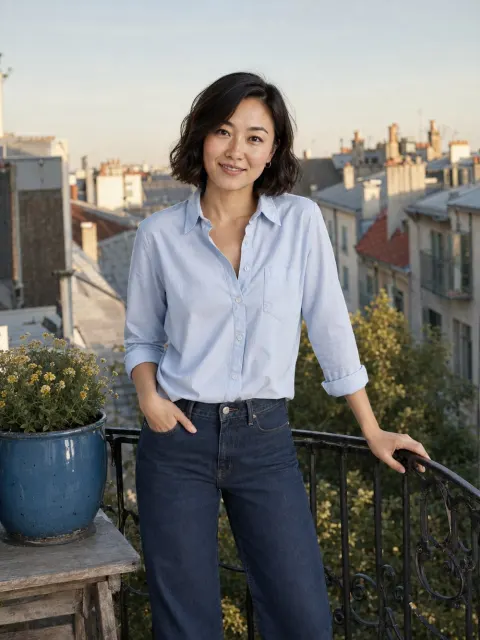
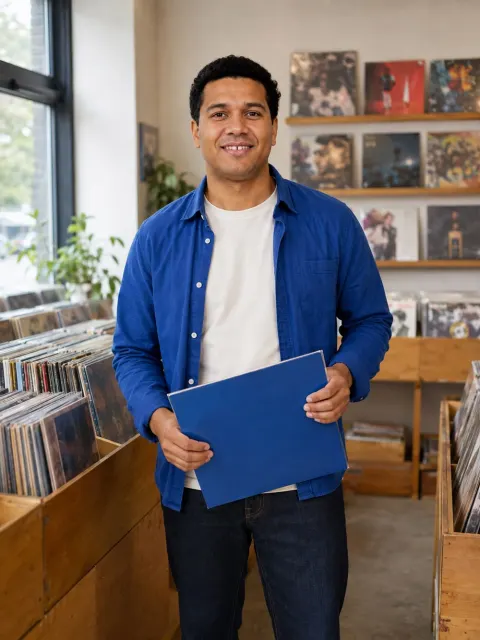
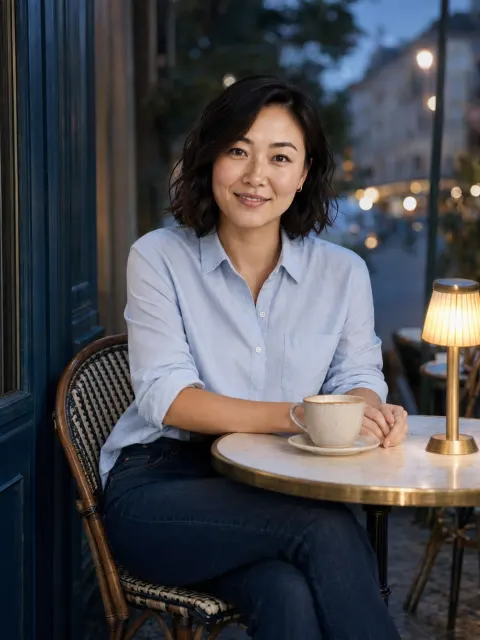
Start with something you would wear to meet a friend for a drink, not an outfit chosen only because it seems photogenic. Familiar clothes let you move naturally, and they set expectations that match the person who turns up for the date.
This guide covers fit, colour, patterns, layers, hats and sunglasses and accessories, then the part people find hardest: your expression. None of it is about following a dress code. The aim is clothing that supports your face instead of competing with it.
Fit and comfort come first
How clothes sit on you matters more than what they are. Pulling shoulders, a twisted collar or a waistband you keep adjusting will show in your posture and your face. Comfort often affects your expression more than a theoretically flattering garment.
Do a two-minute movement test
- Put the outfit on and sit down. Check whether the shirt gapes, the jacket bunches or the neckline shifts.
- Raise your arms a little and turn as if reaching for something.
- Walk a few steps and stand naturally.
- Take one quick photo in the light you plan to use.
If something needs constant attention, bring a simple alternative. A jacket that looks excellent on a hanger may pull awkwardly when you sit; a familiar shirt that stays put usually photographs more naturally.
Tidy the details
- Check for creases, lint and loose labels. A quick steam or iron is worth it.
- Empty bulky pockets: phone, keys and wallet all show as lumps.
- Wear shoes that suit the location, especially for full-length or walking shots.
- Keep collars and scarves from covering your jaw in close portraits.
Choosing colours
There is no single best colour for dating photos. What works depends on your skin tone, the light and, above all, the background. The goal is separation: you should stand out from what is behind you.
- A pale shirt against a pale wall blends in; a darker or richer colour separates you.
- A dark navy top can look great against a warm brick wall and vanish in a dim evening bar.
- Very bright saturated colours can reflect onto your chin and neck in close shots.
- Colours shift between daylight and warm indoor bulbs, so test in the light you will actually use.
To decide, take an unfiltered photo in two familiar tops against the planned background, shrink both to phone size and ask which one keeps your face as the main focus. Comfort counts too. If a favourite colour feels like you, keep it and adjust the background instead. More on how light changes colour is in the lighting guide.
Patterns and prints
You do not need to wear plain clothes in every photo. Patterns work when they stay secondary to your face. The main problem is scale: very fine, high-contrast stripes or small checks can shimmer or look odd once an app shrinks and compresses the image.
- Broad, simple patterns usually read better at small size than tiny dense prints.
- Watch the background. A checked shirt in front of a brick wall or busy shelves adds more visual noise than you expect.
- Compare a patterned frame with a plain one you also like, both at phone size, and look at your expression first.
If the pattern competes, moving to a simpler background often solves it without changing your style.
Jacket or T-shirt?
Neither is better. A jacket adds structure and a T-shirt feels relaxed; what matters is that the outfit suits the setting and your everyday style. A casual walk, a café and a wedding call for different levels of dress, and wearing a suit for a park stroll makes the photo feel staged.
- Check shoulder fit and the neckline. A jacket that bunches when you sit is worse than a well-fitting T-shirt.
- Make sure a T-shirt is not stretched, faded or see-through in bright light.
- A layer such as an open overshirt or light jacket can add shape without feeling formal.
If both represent you, use one in your main portrait and the other on a genuinely different occasion. Six photos from one afternoon with quick outfit changes still look like one afternoon. If you never wear a suit, do not wear one just to suggest status.
Hats and sunglasses
Hats and sunglasses are fine when they have a reason. Sunglasses on a sunny hike or at the beach are natural context; sunglasses indoors hide your expression and add nothing. A cap brim can shade your eyes even when you think it does not.
- Keep at least one recent photo with your face fully visible, ideally as your first photo.
- Check that a brim is not casting a shadow over your eyes.
- Use an accessory shot only if it adds a distinct scene, and remove redundant covered-face pictures.
- If you wear a hat almost every day, it is part of how you look. Include one frame without it too.
Do not use accessories to hide your current appearance. People should not have to guess what you look like without them.
Jewellery, watches and other details
Keep the accessories that express your normal style and remove the ones that dominate a small image. Bright metal, a chunky watch or a strong bag strap can become the first thing anyone notices.
- Take a frame with your normal accessories on.
- Look at it at thumbnail size and notice what catches your eye before your face.
- Remove or reposition one distracting item, such as tucking a shiny pendant under a collar.
- Check for reflections near your face from earrings or glasses.
Do not strip away everything distinctive to imitate a generic corporate look. One or two meaningful details make the photo feel like you.
Outfits across your lineup
You do not need several outfits for one session. Different settings and framing add more variety than costume changes. Across your whole set, though, it helps to show more than one occasion: if everything is formal evening wear, add an ordinary daytime frame, and vice versa.
Think of each photo as having a role, then let the clothes fit it. The lineup guide explains how to give each picture a different job, and the scene styles have ideas for settings.
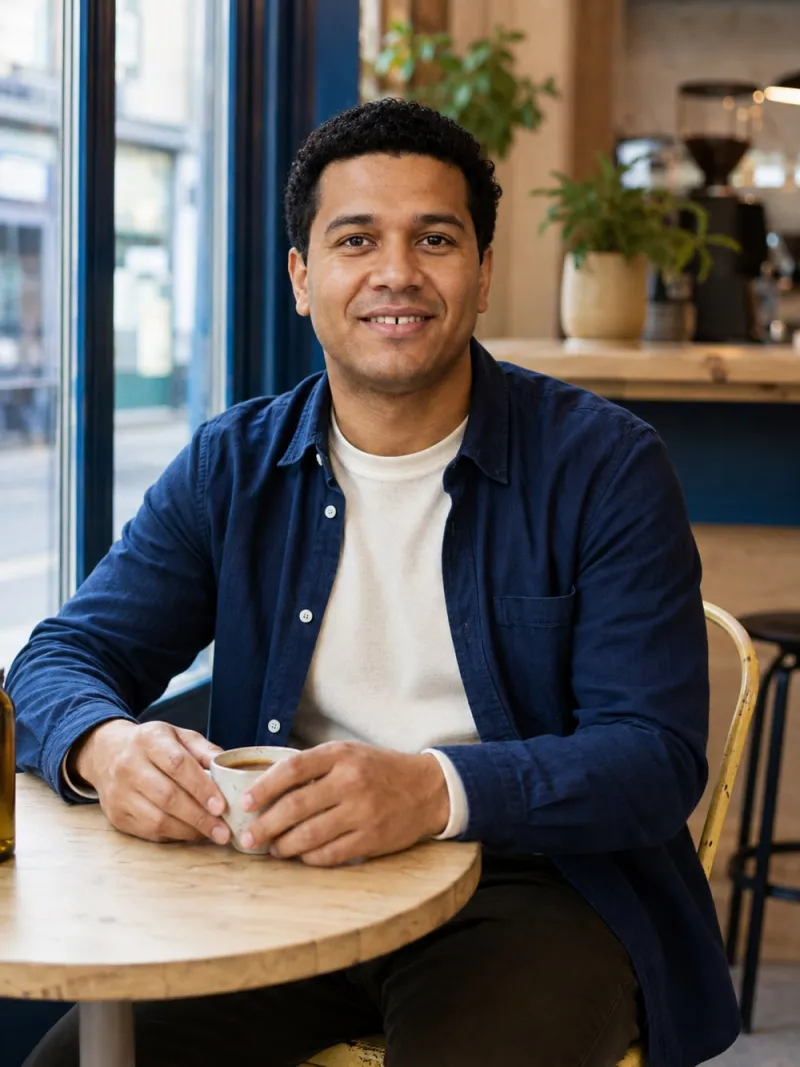
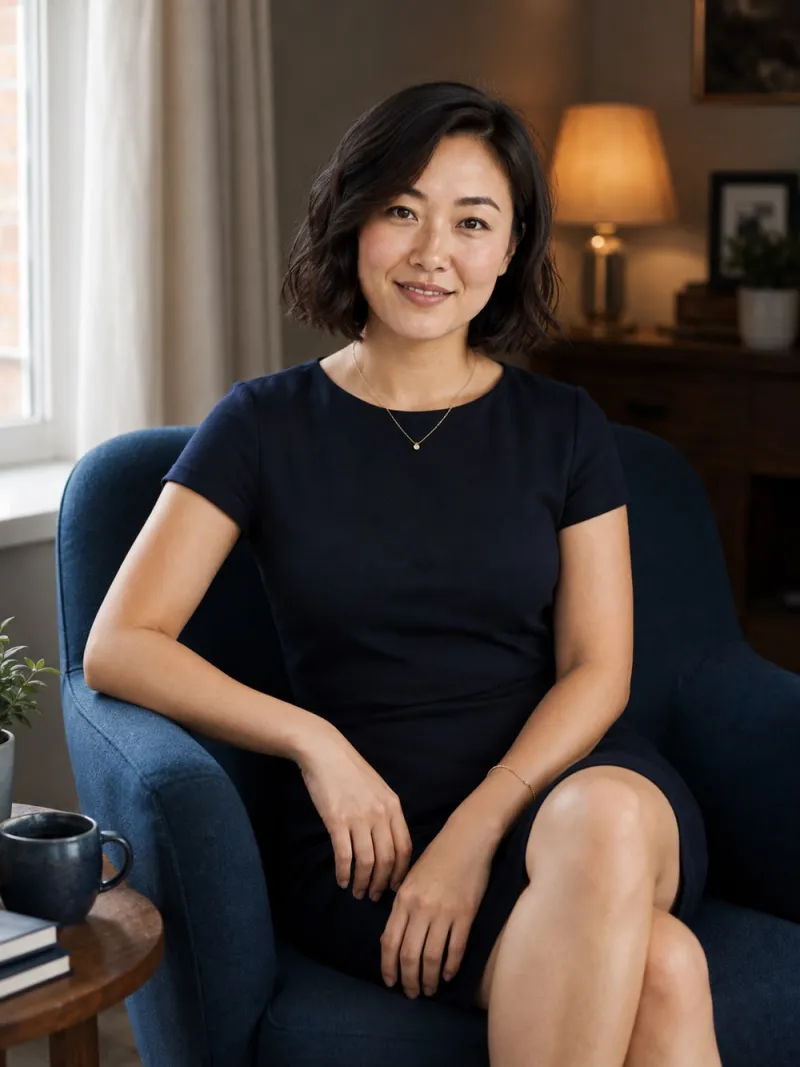
If you use AI portraits from Charmshots scenes, check that fabrics, buttons, collars and jewellery make sense and that the clothing is something you would plausibly wear. The likeness checklist covers what to look for.
Getting a natural smile
Holding a smile through repeated frames creates tension that gets more obvious every time. Natural smiles come from reacting to something, not from holding a position.
- Ask the photographer to chat with you rather than counting down every shot.
- Look away between frames, relax your jaw, then look back when you feel settled.
- Breathe out just before the shutter. It softens the face.
- Try a neutral frame, a small smile and a fuller one, then pause before repeating.
- Think of something that genuinely amuses you, or ask your friend to say something ridiculous.
Choose the expression you recognise in yourself, even if another frame is technically a better grin. Do not reshape your mouth or add teeth in an edit to rescue a stiff frame. Retaking a few pictures in a calmer moment is the better fix.
When a serious expression works
A serious or thoughtful photo can work, if it looks natural and the rest of your profile shows some warmth. A calm, neutral face after a relaxed conversation is very different from a frame where harsh light or tension makes you hard to read.
- Look at the eyes, jaw and shoulders together. Tight shoulders make a neutral face look tense.
- Pair a serious frame with at least one photo showing a different expression.
- Avoid a set of several near-identical moody, tightly cropped portraits.
- Ask someone you trust whether the set feels like you.
There is no need to look cheerful in every frame, but your profile should not rely on a persona you never use in person.
What should I wear for dating profile photos?
Something you would wear to meet a friend, that fits well when you sit and move, and that stands out from your background. Avoid anything you keep adjusting. A simple, well-fitting top is the easiest starting point, but your normal style should still show.
What colours look best in dating photos?
There is no universal best colour. Choose one that contrasts with the background and suits the light. Test two familiar tops in the planned spot, shrink the photos to phone size and pick the one that keeps your face as the main focus.
Do I need several outfits for a photo session?
No. Different settings and framing add more variety than outfit changes. One comfortable outfit is enough for a short session. Show different occasions across your lineup by using photos from genuinely different days.
Are sunglasses or hats okay in dating photos?
In a supporting photo with a reason, such as a hike or the beach, yes. Keep at least one recent photo with your face and eyes fully visible, ideally your first, and drop redundant covered-face pictures.
How do I stop my smile looking forced?
Do not hold it. Look away between frames, relax your jaw, breathe out and look back as the photo is taken. Chatting with the photographer helps far more than a countdown. Choose the expression you recognise as yours.