Charmshots editorial ·
AI dating photos have gone from novelty to something plenty of people quietly consider. The questions that follow are fair ones: are you allowed to use them, is it a kind of catfishing, and if you do use one, how do you keep the whole profile honest?
This guide doesn't quote a rule for each app, because those rules are written by the apps, change without notice and can differ by country. Instead it explains what dating app photo rules generally aim to prevent, how to check the current version yourself, and a practical line between a fair AI portrait and a misleading one. It then covers the decisions that come after: choosing a setting, mixing AI with real photos, and what to say if someone asks. It is not legal advice, and the apps' own wording always wins.
The short answer
- It depends on the app and on when you check. Tinder, Hinge and Bumble each publish their own community guidelines and terms. Read the current version in the app or on its help site.
- The rules broadly target deception. Impersonating someone, using someone else's photos, or presenting a misleading picture of who you are.
- Verification is a separate matter. Live selfie or video checks exist to confirm the real person matches the profile. Never use a generated image for them.
- An upload being accepted is not approval. Apps can review, remove or act on content after it is posted, including after someone reports it.
What dating app photo rules generally care about
Without quoting any specific policy, the published community guidelines of the major dating apps tend to circle the same ideas. Reading them with these in mind makes it easier to apply them to AI images.
- Authenticity. Your profile should represent you. For AI photos, that means images must look like you now, not an idealised lookalike.
- Impersonation. Don't pretend to be someone else. Never generate images from another person's photos.
- Misleading content. Don't misrepresent yourself or your circumstances. Avoid scenes that imply a life, possessions or relationships you don't have.
- Your face visible. Many apps want at least some clear photos of you. A clear AI portrait still needs to be recognisably you.
- Verification. Live checks confirm the person matches the photos. Use your own camera only; never AI images.
Some apps may go further and address AI-generated or heavily altered images directly. That is exactly why reading the current text matters more than any article, including this one.
How to check the current rules yourself
It takes about ten minutes per app and gives you an answer you can rely on today.
- Open the app's settings and look for a link to community guidelines, safety or terms. Or search the app's official help centre for 'photo guidelines'.
- Read the sections on profile photos, authenticity and misrepresentation. Search the page for words such as 'AI', 'generated', 'edited', 'altered' and 'misleading'.
- Read the help article on photo or profile verification separately; it often has its own requirements.
- Note the date you checked. Rules change, so look again if you return to the app months later.
- If something is ambiguous, contact the app's support and ask. Their answer is worth more than a forum thread.
Is using AI photos catfishing?
Catfishing, in the everyday sense, means pretending to be someone you are not: a different face, a different identity, a made-up life. The harm is that the person you meet isn't the person you presented.
By that standard, the question is not whether a photo came from a camera or a generator. It is whether the picture honestly represents you. It helps to see it as a spectrum, from clearly fine to clearly not:
- A real recent photo, lightly cropped and brightened: honest. The moment happened and it shows you as you are.
- An AI portrait that clearly looks like you now, in an ordinary everyday setting: can be honest, if the app allows it. It shows your real appearance; the setting is illustrative but unremarkable.
- An AI portrait in a setting that implies travel, wealth, pets or hobbies you don't have: misleading. The face is yours, but the story isn't.
- A heavily retouched or AI image that changes your face, body or age: misleading. The person who turns up won't match.
- Someone else's photos, or AI built from someone else's face: catfishing. It is not you at all.
The honest end of the spectrum is narrow but real. Someone who matches with you should recognise you comfortably when you meet, and nothing in your photos should set up expectations you would need to explain away.
Three questions before you post any AI photo
Turn that spectrum into a habit. Run every generated image through these three questions, in this order. If any answer is no, leave the picture out, however good it looks.
- Does this look like me, now? Not an idealised lookalike, and not a younger or slimmer version.
- Does the setting imply something untrue? A place, activity, possession, pet or relationship you don't actually have.
- Is it allowed where I'm posting it? Each app sets its own rules, and they change.
Most of the rest of this guide is a closer look at each question: how to check likeness properly, how to read a scene the way a stranger would, and how to fit an approved image into a profile that stays truthful as a whole.
Where AI photos fit in a profile
AI portraits are best treated as illustrations: a well-lit, well-framed picture of you in a pleasant everyday setting. They work as a supporting photo, not as proof of anything.
- Good uses. A clear portrait when all your real photos are dark or group shots. A relaxed scene that matches how you actually spend weekends. A way to explore which colours, framing or settings suit you before you take real photos.
- Poor uses. Claiming hobbies, travel or a social life you don't have. Replacing every real photo. Showing a noticeably different face or body.
- Never. Identity or selfie verification, or any check that asks for a live photo of you.
Real photos still do most of the work. Plan your set with the dating photo lineup guide and give any generated portrait one clear role in it. If you are weighing AI against booking a shoot, AI dating photos vs a photographer compares the options.
Check that it is really you
Compare the result with an ordinary recent photo, side by side, at full size. Look past the hairstyle and clothes. Facial proportions, teeth, hands, body shape and apparent age can all drift without you noticing at first glance, and a generated image tends to drift towards a smoother, more symmetrical, slightly younger version of you.
- Identity. Keep only images that a friend would recognise as you straight away.
- Details. Inspect jewellery, fingers, glasses and clothing edges at full size.
- Consistency. A markedly different face or body from your real photos is a reason to leave it out, even if the picture is flattering.
For a full review routine, including hands, skin texture and hair, use the AI portrait likeness checklist. Better source selfies make drift less likely in the first place; choosing selfies for AI portraits explains what to upload.
The setting matters as much as the face
Most discussion focuses on whether an AI portrait looks like you. That is essential, but it is only half the test. A background is never just a background. A summit suggests you hike. A sports car suggests money. A dog suggests you own one. A famous skyline suggests you've been there. Even with a perfectly accurate face, the scene can tell a story that isn't true.
Read the scene as a viewer would
Ask what a stranger might reasonably infer about your work, income, travel or relationships from the picture. Then ask whether you'd be comfortable if they brought it up on a first date. If the honest answer would be 'I've never actually done that', the scene is wrong for you.
- Pets. A dog in your photo suggests you have a dog. If you don't, skip the dog walk scenes.
- Travel. A recognisable foreign street suggests you've been there. Prefer local or generic settings unless you have.
- Hobbies. A climbing wall suggests you climb. Choose activities you actually do, like a Saturday market or a Sunday bake.
- Status. Luxury cars, yachts, designer shopping bags and corner offices are never a good idea, AI or not.
- People. Don't use AI to manufacture friends, children, partners, events or achievements.
A quick scene check
- Name the location or activity the picture implies, in one short phrase.
- Remove borrowed status symbols.
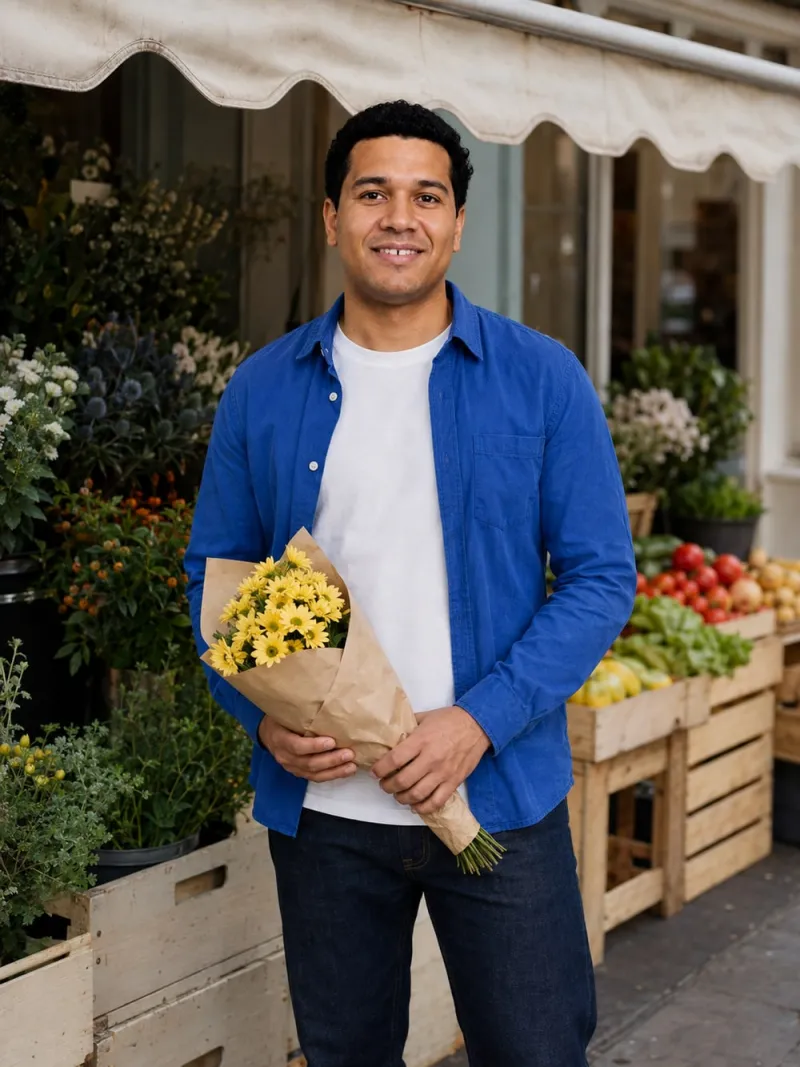
- Prefer ordinary settings you'd happily describe: a café, a market, a park, a kitchen, a bookshop.
- Pick scenes close to your real week. If you go to a market most Saturdays, that's a fair setting; if you've never been climbing, skip the climbing wall.
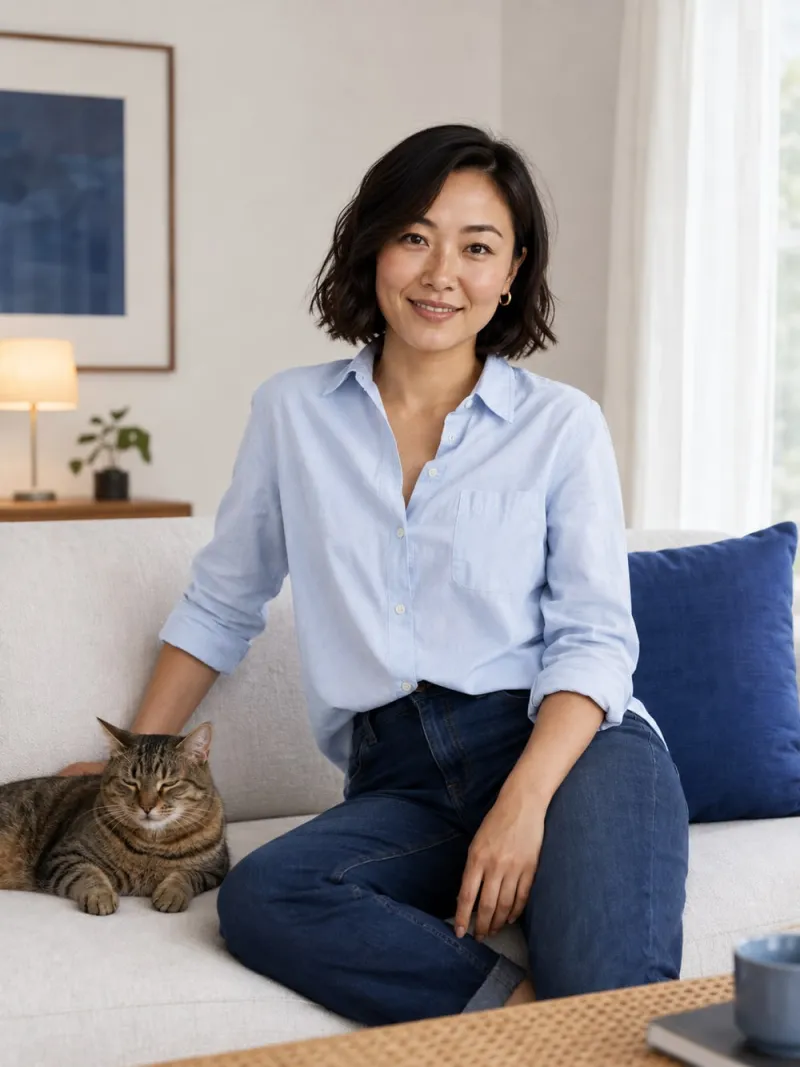
A simple outdoor portrait is different from an image that appears to document you on a mountain you've never visited. You can browse ordinary settings in the scene styles and pick the ones that match your actual life.
Combine real and AI photos coherently
A profile reads as one person. Every photo should agree on your face, hair, skin tone and build, and the real photos should carry the lived experiences.
- Keep a recent real portrait. It anchors your appearance for everyone who views the profile.
- Use real photos for real moments. Friends, family, trips, events and pets should be genuine.
- Give each AI image one role. For example, a clear portrait to replace a dim selfie, not a fake holiday.
- Use as few as do a clear job. One or two generated portraits alongside genuine pictures is a sensible ceiling for most profiles.
- Check recognition across the set. Lay all the photos out together. If one looks like a different person, remove it.
Avoid a visual bait-and-switch
Don't let your most polished image set an appearance the remaining photos can't match. A restrained, natural-looking portrait sits comfortably beside real everyday pictures. A glossy luxury scene adds a story the rest of the profile can't support. Be especially careful with your main photo; choosing your first dating photo covers why it shapes every first impression.
Editing, retouching and generation are different things
Discussions about AI photos often lump every kind of change together. It helps to separate them, because app guidelines and your matches are likely to see them differently. The difference matters most when a picture appears to record a real moment.
- Basic editing. Cropping, straightening, brightening, correcting a colour cast, gently sharpening. The photo still records a real moment and shows you as you are. This is ordinary and widely accepted.
- Heavy retouching. Reshaping your jaw, slimming your body, smoothing away every line, changing your eye colour. The moment happened, but your appearance has been altered. This is where many profiles start to mislead, whether or not AI was involved.
- Generation. A new image of you, in a scene that never happened. It can be faithful to your appearance, but it is an illustration, not a record.
Choose the smallest useful change
- Write down what's actually wrong with the photo: too dark, badly cropped, slightly soft.
- Try a simple edit first. The free photo editor handles crop, brightness, colour and sharpening locally in your browser; it doesn't invent missing detail.
- Consider generation only for a clearly understood purpose, such as a clean portrait when you have none at all.
- Review likeness and scene implications afterwards, using the three questions above.
For practical editing steps and how to avoid overediting, see how to edit dating photos.

Verification is never the place for AI
Many apps offer some form of photo or video verification, usually a live selfie or short clip compared with your profile photos. The exact process differs by app and changes over time, so read the app's own help pages.
The rule is simple: verification is done with your own camera, in real time, with your real face. Trying to pass a verification step with a generated image defeats its whole purpose and is likely to breach the app's terms. Your profile photos, AI or not, should look enough like you that the live check is unremarkable.
Should you say a photo is AI?
Check whether the app expects disclosure; some contexts do. Even where there is no rule, honesty is simple: if a match asks whether a photo is generated, say so. Something like 'That one's an AI portrait; the rest are from this year' is unremarkable and honest.
Some people prefer to mention it upfront in a caption or prompt. That is a personal choice. What matters is never denying it when asked, and never letting a generated photo carry a claim about your life. An introduction becomes less useful when it creates expectations you can't comfortably meet.
Keep originals and labels
Store your real photos separately from edited and generated versions. A folder called 'AI portraits' or a filename tag such as '-ai' stops you mixing them up months later, especially when you update your profile after a haircut or a new season. It also makes it easy to answer honestly if someone asks how a picture was made.
A checklist before you upload an AI photo
- Rules. You have read the app's current guidelines today and nothing prohibits it.
- Likeness. Compared side by side with a recent real photo, it is clearly you: face shape, teeth, hairline, build and apparent age.
- Details. Hands, jewellery, glasses and clothing edges look right at full size. The likeness checklist covers what to inspect.
- Scene. It implies nothing about pets, travel, hobbies, friends or money that isn't true.
- Balance. Your profile still includes recent real photos; AI fills a specific gap rather than replacing everything.
- Verification. You will complete any verification with your own camera.
- Honesty. You are comfortable answering plainly if someone asks.
If an app removes a photo or flags your profile
If a photo is rejected or removed, don't simply re-upload it. Read the message the app sends, reread the relevant guideline and, if it isn't clear, contact support. Replace the image with a recent real photo while you sort it out. Apps can restrict accounts for repeated breaches, so it is worth taking seriously.
How Charmshots approaches this
Charmshots is built for the honest end of the spectrum: realistic photos of you, from your own selfies, in everyday scenes such as cafés, markets, kitchens and walks. You choose the scenes, review every result and decide what, if anything, to use. We'd always suggest keeping recent real photos alongside them, checking the rules of the app you use, and leaving out any result that doesn't look like you.
For app-specific advice, including what each app's layout rewards, see Hinge photo ideas, Tinder photo ideas and Bumble photo ideas. AI photos for dating apps explains how the studio works.
Are AI photos allowed on Tinder?
Check Tinder's current community guidelines in the app or on its help site, as rules change and can vary by region. Guidelines generally focus on being authentic and not misleading people. Whatever the photo rules, never use AI images for verification.
Are AI photos allowed on Hinge?
Hinge publishes its own guidelines, and they can change, so read the current version before uploading. If you use AI portraits, keep recent real photos in your six, make sure every image clearly looks like you and avoid scenes that imply a life you don't have.
Does Bumble allow AI-generated profile pictures?
Bumble's rules are set by Bumble and may change, so check its current guidelines and help pages. The safe approach on any app is the same: images that look like you now, real photos alongside them and your own camera for verification.
Is using AI photos on a dating app catfishing?
Catfishing means presenting yourself as someone you are not. Using someone else's face, or AI that changes your face, body or age, crosses that line. A portrait that clearly looks like you now, in an ordinary setting, is different, provided the app allows it and you are honest if asked.
How many AI photos should I use in my profile?
As few as do a clear job. Real, recent photos should carry your profile, with any generated portrait filling one specific gap, such as a clear, well-lit picture of your face.
Is a realistic-looking AI image enough?
No. Realism only means the picture looks like a photograph. It also needs to represent your current appearance and avoid inventing experiences, pets, friends or a lifestyle you don't have.
What's the difference between editing and AI generation?
Editing adjusts a real photo, such as cropping or brightening it, so the moment still happened. Generation creates a new image that may show places and details that never existed, so it's an illustration, not a record.
Can a dating app tell if a photo is AI-generated?
Apps don't publish full details of how they review photos, so don't assume either way. Focus on what you control: follow the current guidelines, use images that genuinely look like you and complete any verification with your own camera.
Should I tell matches my photo is AI?
Check whether the app expects disclosure. Either way, if someone asks, say so plainly. Some people mention it upfront; what matters is never denying it and never using an AI image to claim something about your life.
Can I use an AI photo for selfie verification?
No. Verification exists to confirm the real person matches the profile and is done live with your own camera. Using a generated image defeats its purpose and is likely to breach the app's terms.