
Charmshots.

Everyday and casual · 6 example scenes

Casual, everyday photos for your dating profile

Everyday photos do the heavy lifting in a dating profile. They show what you look like on an ordinary day, which is who someone will actually meet. They are also the easiest to take well.

  • Made from your selfies
  • One-time from $12
  • Fictional models shown
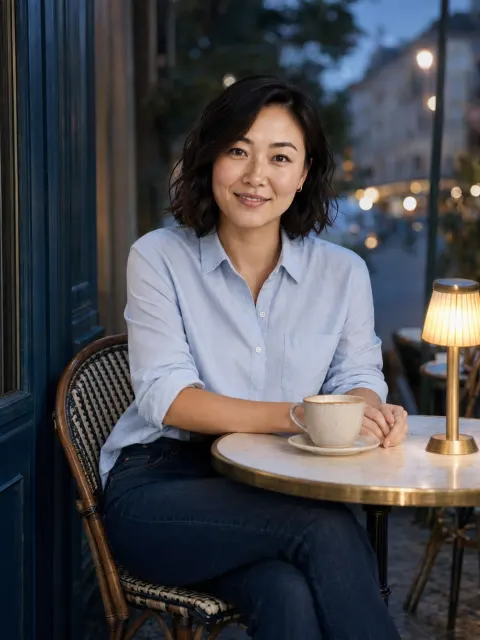
Mei, a fictional model, in the Coffee, no rush scene
Mei · fictional model
Marcus, a fictional model, in the Coffee, no rush scene
Marcus · fictional model

Why everyday photos matter most

A dramatic travel shot or a dressed-up evening is a nice extra, but the pictures that do most of the work are ordinary: you at a café table, on your front steps, on a walk. They answer the most important question anyone has when they open your profile, which is what you look like on a normal day.

They also set honest expectations. The person who turns up to a first date is the person in jeans and a jumper, not the one in the gala photo. A lineup built on everyday pictures, with one or two special ones on top, makes that meeting feel familiar rather than surprising.

Your first photo is usually an everyday one

The lead slot needs a clear, recent, solo picture with your eyes visible and enough space around your head to survive the app’s crop. Everyday settings are ideal for it, because they don’t compete with your face. A café window, a shaded street or a balcony in late light all work.

  • Face the light. A window or open shade in front of you, not behind.
  • Head and shoulders, or a little wider. Close enough to recognise you at thumbnail size.
  • A relaxed expression. Chatting to whoever holds the phone beats staring into the lens.
  • No sunglasses, no group, no heavy filter.

The first-photo guide goes into this slot in detail.

A comfortable full-length photo

Many people find one full-length picture helpful because it shows your everyday style and gives a straightforward, current impression of you. Choose a clean background with room above your head and below your feet, and ask your photographer to stand a few steps back and hold the phone level at about chest height.

  • Keep the phone level; looking down or up distorts proportions.
  • Stay away from the edges of a wide-angle frame, where stretching is worst.
  • Sit, lean or walk rather than standing stiffly to attention.
  • Wear clothes you genuinely wear, and don’t reshape your body in editing.

Cafés, rainy days and changing seasons

A café gives you soft window light and an easy, sociable setting. Go at a quiet time, check the venue is happy with photos, clear the table of receipts and phones, and keep other customers out of frame. Hold a cup only if it feels natural; one café picture is enough.

You don’t need sunshine. Overcast light is soft and flattering, and a covered doorway or a bright window lets you shoot on a wet day with the weather in the background. Wipe the lens first; raindrops cause a haze that is hard to fix.

Seasonal photos keep a profile feeling current. Rotate one or two as the year turns, autumn colour, summer evenings, and keep your clearest portraits steady. A lineup still full of snow in July looks like it was set up and forgotten.

Mistakes that make casual photos weaker

  • Car selfies. The most common casual picture, and usually the least flattering: cramped, overhead light, a seatbelt across your chest.
  • Near-duplicates. Four café portraits in different shirts still do one job. Keep the strongest.
  • Sunset silhouettes. Beautiful, but nobody can see your face. Use sunset light from the side.
  • Cropped-out exes and strangers’ arms. If something unexplained is left at the edge, choose another picture.
  • Old photos. If you have changed your hair, weight or style, everyday pictures should show you now.

Examples

Six everyday scenes

These examples were made with Charmshots from fictional models’ selfies. Each is an ordinary setting with good light and a clear face, the kind of picture most lineups are missing.

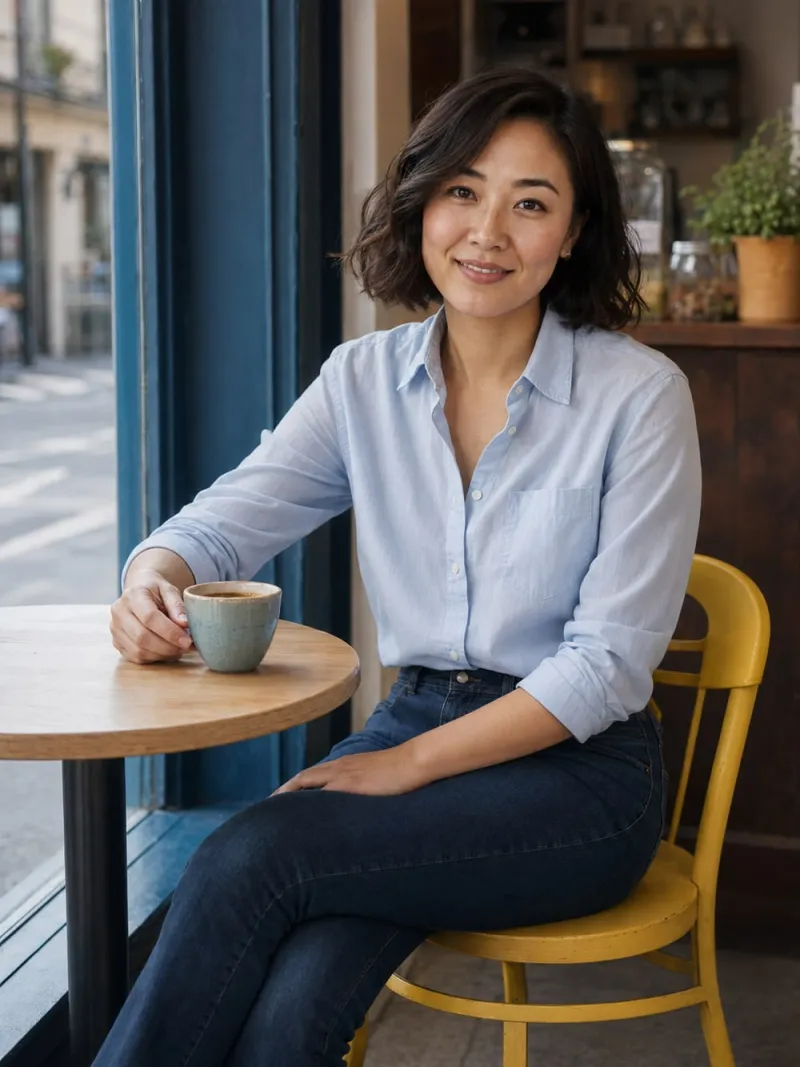
Mei, a fictional model, in the Coffee, no rush scene
Mei · fictional model
Marcus, a fictional model, in the Coffee, no rush scene
Marcus · fictional model

Scene 1 of 6 · “Coffee, no rush”

Coffee, no rush

A small outdoor café table, a coffee in front of you, mid-sentence and smiling across at whoever is taking the picture, the street softly blurred behind. It is one of the most familiar first-date settings, so it quietly shows what you might be like across the table.

Soft daylight keeps your face clear, which makes this a strong lead or second photo. A Breton top or a navy jumper over a collar is exactly what you would wear to meet someone for coffee.

Name your actual local café or usual order in a prompt so it feels like yours. The styling is a neighbourhood café, not a claim about Paris, so avoid captions that suggest a trip. Choose this or an evening café, not both.

Create this scene →
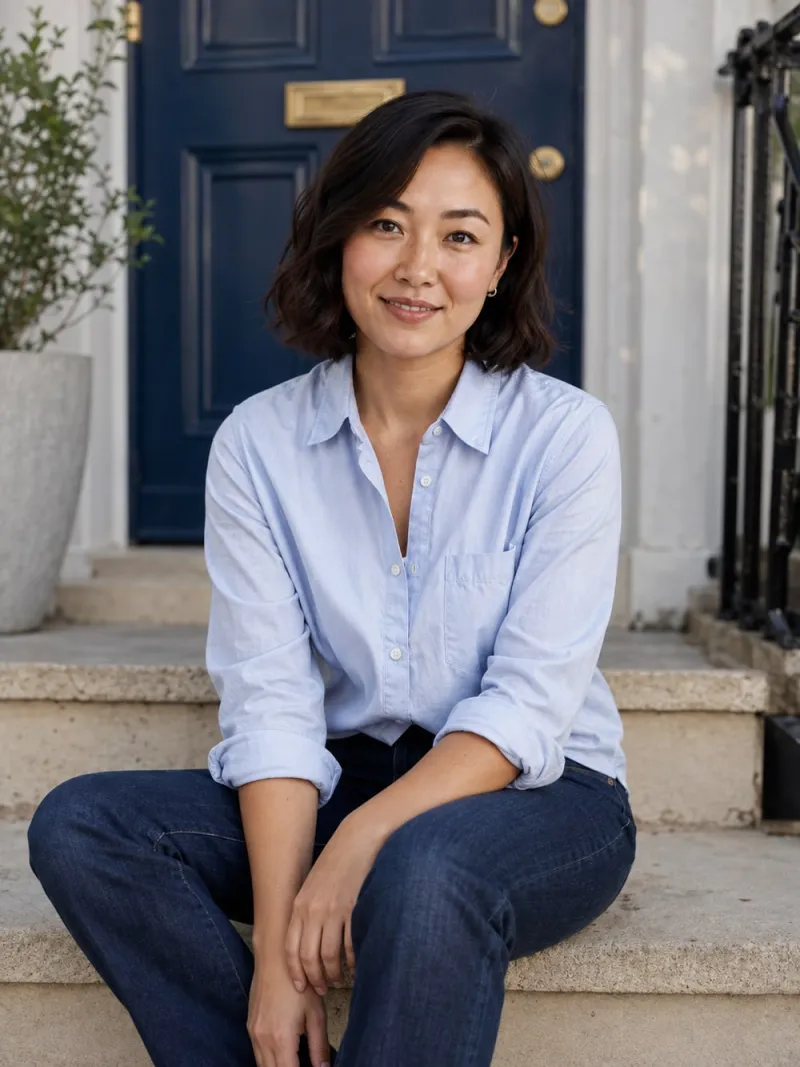
Mei, a fictional model, in the Around the neighbourhood scene
Mei · fictional model
Marcus, a fictional model, in the Around the neighbourhood scene
Marcus · fictional model

Scene 2 of 6 · “Around the neighbourhood”

Around the neighbourhood

Sitting on the front steps of a brownstone, a coffee cup beside you, elbows on knees, chatting and smiling on a tree-lined street. It gives a full-length view that looks natural rather than lined up for inspection.

This is your “what you’re really like” frame: a white tee and jeans, with a long black blazer on Mei. Because it shows your whole figure, it has to match how you look now; check proportions against a recent real photo.

Pair it with a closer head-and-shoulders portrait, and mention your neighbourhood or a favourite local spot in a prompt. It suggests someone who knows the neighbours, which is a nice thing to suggest.

Create this scene →
Mei, a fictional model, in the Across the river scene
Mei · fictional model
Marcus, a fictional model, in the Across the river scene
Marcus · fictional model

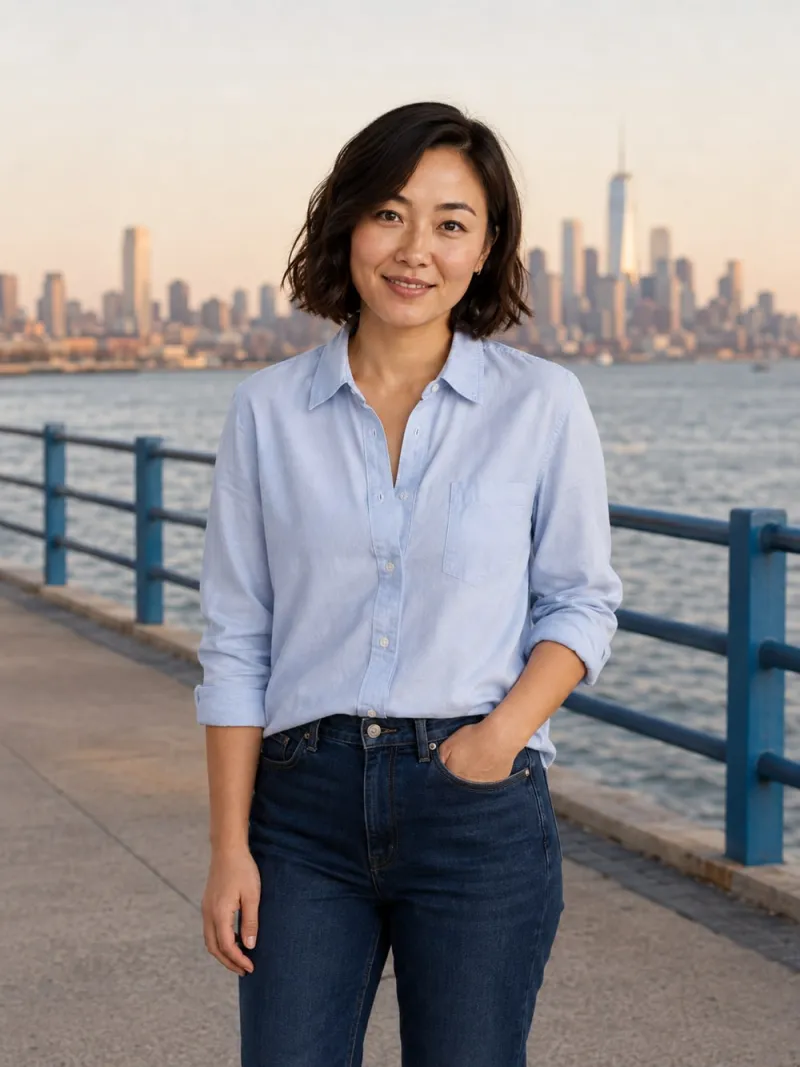
Scene 3 of 6 · “Across the river”

Across the river

A waterfront at dusk, leaning on a railing with the city lit up behind you and a calm smile. Skyline photos often shrink the person to a dot; this one keeps the city soft in the distance and you at three-quarter length.

It reads as urban and confident without being flashy, and a black leather jacket over a white tee is about as classic as city clothes get. Check that evening light keeps your eyes visible rather than in shadow.

Use it if you live in or often visit a city with a waterfront, and name your own favourite view in a prompt. That doubles as a date suggestion.

Create this scene →
Mei, a fictional model, in the Last light at home scene
Mei · fictional model
Marcus, a fictional model, in the Last light at home scene
Marcus · fictional model

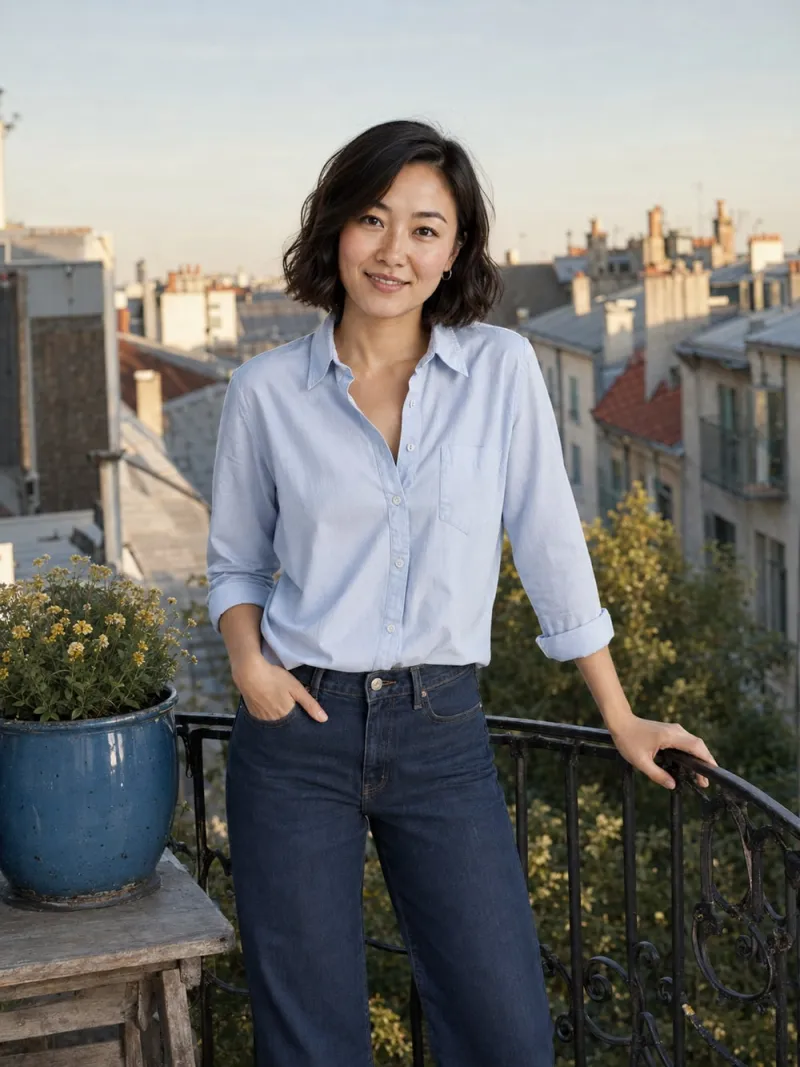
Scene 4 of 6 · “Last light at home”

Last light at home

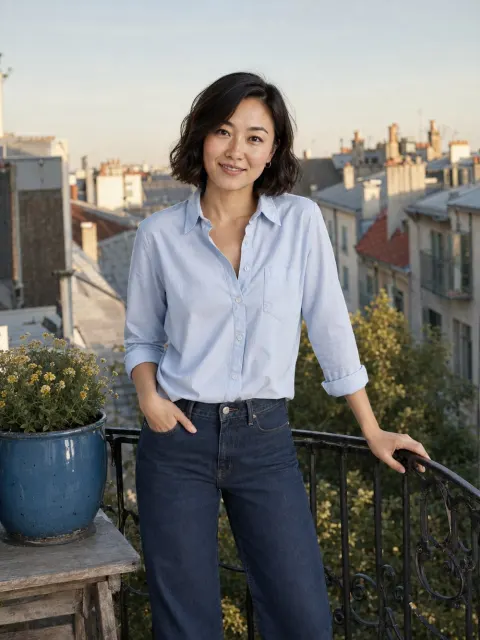
Leaning on a small city balcony railing with a mug, golden sun from the side and rooftops behind. It keeps the flattering late-afternoon light close to home, without a road trip.

Side light is kind to almost everyone, so this can be a strong lead photo. A soft grey hoodie or a beige cardigan over a white tee keeps it relaxed. Warm light can shift skin tone and eye colour, so compare it with a recent ordinary photo.

It suggests someone settled and happy to stop for a moment at the end of the day. Don’t stack it with other sunset pictures; one warm-light shot per lineup is plenty.

Create this scene →
Mei, a fictional model, in the The long way home scene
Mei · fictional model
Marcus, a fictional model, in the The long way home scene
Marcus · fictional model

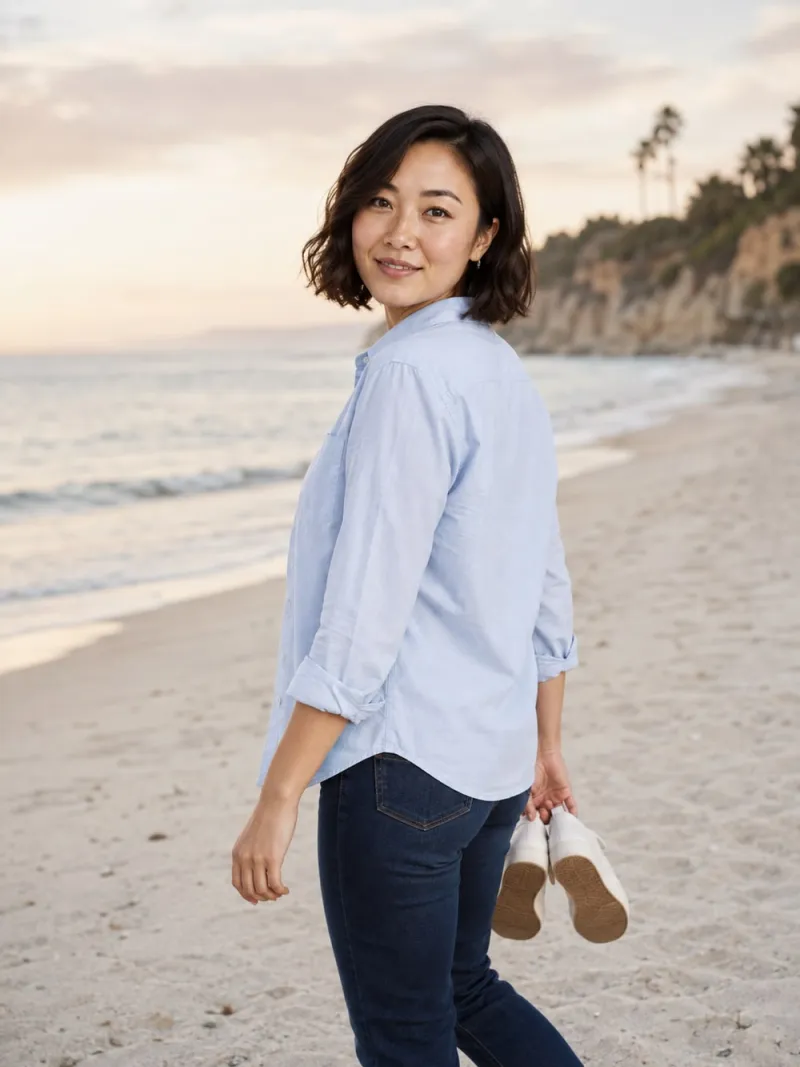
Scene 5 of 6 · “The long way home”

The long way home

Walking barefoot along the shoreline at sunset, trousers rolled or a white cotton dress held clear of the waves, looking down and laughing. It is a beach picture that isn’t a swimwear shot, and it feels calm and a little romantic without trying.

It is shot from slightly behind and to the side, so your face isn’t fully towards the camera. That makes it a lovely supporting image and a poor lead. Keep a clear daylight portrait first so people meet your face before the view.

One beach or water picture is enough. Name a coast you actually know in a prompt.

Create this scene →
Mei, a fictional model, in the A pocket of autumn scene
Mei · fictional model
Marcus, a fictional model, in the A pocket of autumn scene
Marcus · fictional model

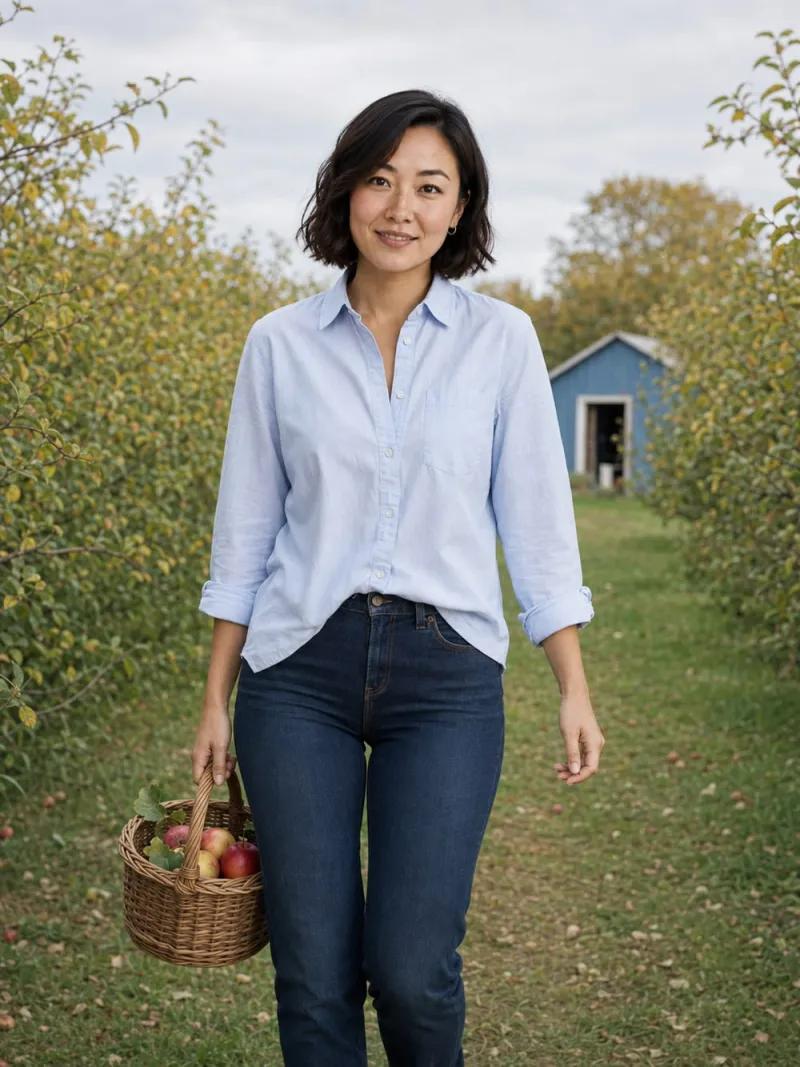
Scene 6 of 6 · “A pocket of autumn”

A pocket of autumn

Reaching for a branch in an orchard and looking back at the camera, a wicker basket of apples on the grass. Autumn gives you soft light and colour without much effort, and the apple-picking gives you a reason to be there.

A rust corduroy shirt or a chunky mustard jumper suits the season perfectly. It suggests someone who likes seasonal rituals and a day out with a purpose, and it invites easy questions: do you bake, which orchard is it, what is your favourite thing about autumn?

Use it in autumn and early winter, then swap it out. Mention what you do with the apples, even if the honest answer is eating them on the way home.

Create this scene →

Notes for Hinge, Tinder and Bumble

Everyday photos travel well between apps, which is why they make a good master set. On Tinder, put your clearest one first and check the crop leaves room above your head. On Hinge, pair an everyday picture with a prompt about the place, your café order or your street, so it starts a conversation. On Bumble, use everyday shots to anchor a varied scroll. In every case, look at the actual preview after uploading.

Where AI fits in an everyday lineup

Everyday scenes are the most honest place for an AI portrait, because a café or a balcony makes almost no claim about your life. That is also why likeness matters most here: if an everyday picture doesn’t look exactly like you, nothing else in it will save it.

  • Compare the result side by side with a recent real photo: face shape, hairline, teeth, build and apparent age.
  • Keep genuine recent pictures in the lineup alongside any AI ones.
  • Never use an AI image for an app’s verification step, and say it is AI if a match asks.
  • Good source selfies make better results; the selfie guide shows which to upload.

Questions

What counts as a good casual photo for a dating profile?

One where your face is clear, the setting is ordinary and you look comfortable. Everyday clothes, natural light and a small detail someone can ask about are usually enough.

Do I need a full-length photo on my dating profile?

Many people find one helpful because it gives a fuller picture of you. It should be recent and accurate, taken from about chest height with the phone level.

Is a coffee shop photo good for a dating profile?

Yes. It is familiar, usually well lit and suggests an easy first date. Make it specific with a prompt about your order or your favourite café.

Should I change my dating photos with the seasons?

Refreshing one or two seasonal pictures keeps a profile feeling current. Keep your clearest portraits steady and rotate the rest.

Can my first photo be taken at sunset?

Yes, if your face is clear and lit from the side. Avoid silhouettes and strong backlight for a lead photo.

Keep reading

More themes

Other kinds of pictures to consider.

All photo ideas →

Your next first impression starts here.

Pick your scenes, add a few selfies and see your first photo in minutes. One-time packs from $12.